A new era where technology brings people closer
Humanity is entering a new stage defined by deeper connections between people, devices, and intelligent systems. The way we work, learn, communicate, and solve problems is rapidly changing thanks to technological advances that are shaping a more connected world.
For decades, connection simply meant the ability to communicate from a distance. Today, it represents much more: real-time information sharing, access to intelligent services, and the creation of systems designed to improve everyday life.
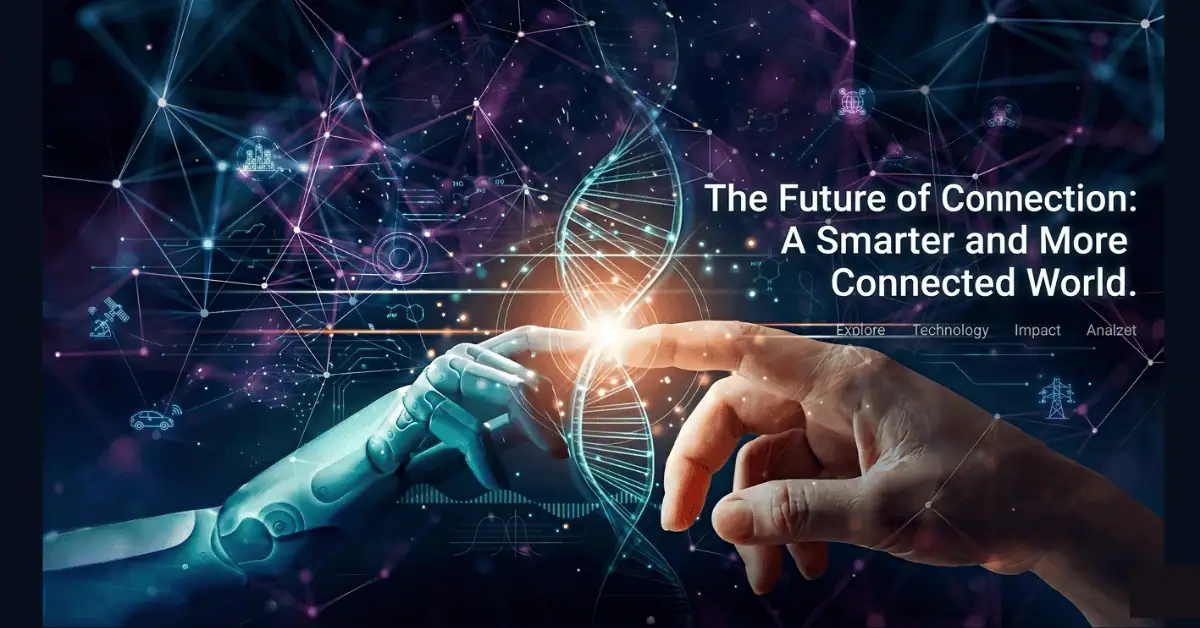
The future of connection will not only be about having more devices, but about building an ecosystem where technology works efficiently to support individuals and entire communities.
📡 The evolution of digital connectivity
Connectivity has evolved at an extraordinary pace. From early communication systems to today’s advanced networks, each stage has opened new ways of interaction.
The internet transformed how the world shares information. Now, next-generation networks and intelligent systems are creating a society where millions of devices can communicate with each other seamlessly.
Future connectivity will enable:
- Faster data transmission
- More stable device communication
- Personalized digital services
- New forms of human-technology interaction
This evolution is driving change across education, healthcare, transportation, business, and entertainment.
🤖 Artificial Intelligence: The brain of a connected world
Artificial intelligence is one of the most important technologies shaping the future of connection.
AI systems can analyze massive amounts of data, detect patterns, and support better decision-making.
In a highly connected world, AI will play a key role in areas such as:
🏥 Smart healthcare
Advanced systems will help analyze medical data, improve diagnoses, and deliver more personalized patient care.
🚗 Smart transportation
Vehicles and mobility systems will communicate to improve safety, reduce travel time, and optimize routes.
🏠 Smart homes
Connected homes will adapt to human behavior, using intelligent devices to improve comfort and efficiency.
🌎 Smart cities: Connection serving society
Future cities will rely heavily on technology to improve quality of life.
A smart city will use digital systems and real-time data to manage resources more efficiently.
Examples include:
🚦 Real-time traffic management
💡 Efficient energy usage
🌱 Environmental protection solutions
🚰 Better resource distribution
The goal is to create safer, more organized, and sustainable urban environments.
🧠 The connection between humans and machines
The relationship between humans and technology will become increasingly seamless.
Devices will evolve from simple tools into intelligent assistants capable of understanding human needs.
Future interaction will include:
- More natural interfaces
- Advanced recognition systems
- Augmented reality tools
- Intelligent digital platforms
This will redefine how people interact with the digital world.
🌐 A more united planet through technology
One of the greatest benefits of global connectivity is the ability to bring people and cultures closer together.
Technology is breaking geographical barriers, allowing people from different parts of the world to collaborate, learn, and share knowledge.
Digital education is expanding access to information, while businesses are increasingly operating on a global scale, creating new economic opportunities.
🔒 Challenges of a hyper-connected world
Despite its benefits, increased connectivity also brings challenges.
As digital information grows, privacy and security become more important than ever.
Key challenges include:
Data protection
Individuals need greater control over how their personal information is used.
Cybersecurity
Connected systems must be protected with advanced security measures to prevent risks.
Equal access
Technology must reach more communities to avoid widening the digital gap.
The future of connection depends not only on innovation, but also on responsible use.
🚀 Impact on work and new opportunities
Digital transformation is reshaping the workplace.
Many tasks will be supported by intelligent tools that increase efficiency and productivity.
Key future skills will include:
- Technological adaptability
- Creative thinking
- Data analysis
- Continuous learning
New generations will find opportunities in technology, innovation, communication, and digital development industries.
🌱 Technology and sustainability: Connecting with the planet
Technological innovation can also help address environmental challenges.
Connected systems can optimize energy use, reduce waste, and promote sustainable solutions.
The combination of technology and environmental awareness will lead to:
🌿 Cleaner cities
⚡ Efficient energy systems
🌎 Responsible industrial processes
The future of connection will also play a major role in protecting the planet.
✨ The world we are building
The future of connection is more than internet access or smart devices. It represents a new way of living where people, information, and technology are deeply integrated.
Artificial intelligence, smart cities, digital systems, and new communication tools are creating a world full of possibilities.
The real challenge will be ensuring that this technological evolution benefits everyone and contributes to a smarter, more efficient, and more united global society.
🧠 The Role of Artificial Intelligence in Connectivity
Artificial Intelligence is one of the key drivers of the connected future. AI allows machines to analyze massive amounts of data, detect patterns, and make decisions without human intervention.
In a connected world, AI is used in many areas:
- Predicting traffic patterns in smart cities
- Personalizing content on social media platforms
- Enhancing customer service through chatbots
- Improving healthcare diagnostics and patient monitoring
- Optimizing energy consumption in smart homes and buildings
As AI continues to evolve, it will become even more deeply integrated into everyday life, making systems more efficient and responsive.
📡 The Power of IoT (Internet of Things)
The Internet of Things plays a major role in creating a fully connected environment. IoT refers to physical objects embedded with sensors and software that allow them to connect and exchange data over the internet.
Examples include:
- Smart refrigerators that track food inventory
- Wearable devices that monitor heart rate and sleep patterns
- Connected cars that communicate with traffic systems
- Industrial machines that report maintenance needs automatically
These devices generate continuous data streams, helping individuals and organizations make better decisions faster than ever before.
⚡ The Impact of 5G and Future Networks
The rollout of 5G technology has significantly increased the speed and reliability of internet connections. This allows for real-time communication between billions of devices.
With 5G, the world experiences:
- Ultra-fast download and upload speeds
- Low latency for instant communication
- Improved performance of smart devices
- Better support for autonomous systems like self-driving cars
In the future, 6G networks are expected to take connectivity even further, enabling near-instant data transfer and supporting advanced technologies such as holographic communication and fully immersive virtual environments.
🏙️ Smart Cities: The Future of Urban Living
One of the most visible applications of a connected world is the development of smart cities. These cities use digital technology and data to improve infrastructure, reduce waste, and enhance the quality of life for citizens.
Smart cities include systems such as:
- Intelligent traffic management to reduce congestion
- Smart lighting systems that save energy
- Waste management systems that optimize collection routes
- Public safety systems with real-time monitoring
The goal of smart cities is to create environments that are more sustainable, efficient, and livable.
🏠 Smart Homes and Daily Life Transformation
At the personal level, smart homes are becoming more common. These homes use connected devices to automate daily tasks and improve comfort and security.
Some examples include:
- Voice-controlled assistants like Alexa or Google Assistant
- Smart security cameras and alarm systems
- Automated lighting and climate control
- Appliances that can be controlled remotely via smartphone
This level of automation not only improves convenience but also helps reduce energy consumption and costs.
⚖️ Challenges of a Hyper-Connected World
Despite its advantages, a fully connected world also presents several challenges that must be addressed.
One of the main concerns is privacy. With so much data being collected, there is a risk of misuse or unauthorized access. Cybersecurity becomes extremely important in protecting personal and organizational information.
Another challenge is dependence on technology. As systems become more automated, society may become overly reliant on digital infrastructure, which could be vulnerable to failures or cyberattacks.
Additionally, the digital divide remains an issue, as not all regions have equal access to advanced technologies.
🔮 The Future: What Comes Next?
Looking ahead, the future of connection will continue to evolve rapidly. Experts predict that by 2030 and beyond, technology will become even more integrated into human life.
Possible developments include:
- Fully autonomous transportation systems
- AI managing entire smart cities
- Advanced virtual and augmented reality environments
- Brain-computer interfaces for direct digital interaction
- Global ultra-connected ecosystems with minimal latency
In this future, the line between the physical and digital world will continue to blur.
The future of connection is not just about faster internet or smarter devices. It represents a complete transformation of how society operates, communicates, and evolves. We are moving toward a world where technology is no longer an external tool but an integrated layer of everyday life, shaping decisions, behaviors, and experiences in real time.
As Artificial Intelligence, the Internet of Things, and advanced communication networks continue to develop, the boundaries between physical and digital environments will keep fading. This shift will create new opportunities for innovation in education, healthcare, transportation, entertainment, and business. Entire industries will be redefined by automation, predictive systems, and intelligent data analysis.
At the same time, this evolution brings important responsibilities. The more connected the world becomes, the more essential it is to protect privacy, ensure cybersecurity, and promote ethical use of technology. Governments, companies, and individuals will need to work together to establish regulations and frameworks that prevent misuse of data and guarantee safe digital environments for everyone.
Another important aspect of this transformation is accessibility. While developed regions are rapidly adopting smart technologies, many parts of the world still lack basic digital infrastructure. Closing this gap will be crucial to ensure that the benefits of a connected world are shared globally, rather than concentrated in specific regions or populations.
In addition, human adaptation will play a key role. As automation increases, people will need to develop new skills to work alongside intelligent systems. Education systems will have to evolve, focusing more on creativity, critical thinking, digital literacy, and adaptability rather than repetitive tasks that machines can already perform more efficiently.
Ultimately, the future of connection is about balance. It is about combining technological progress with human values. If implemented responsibly, this connected world has the potential to improve quality of life, reduce global inefficiencies, and create smarter, more sustainable societies.
The journey toward this future is already underway, and every innovation today is building the foundation for a more intelligent and interconnected tomorrow.