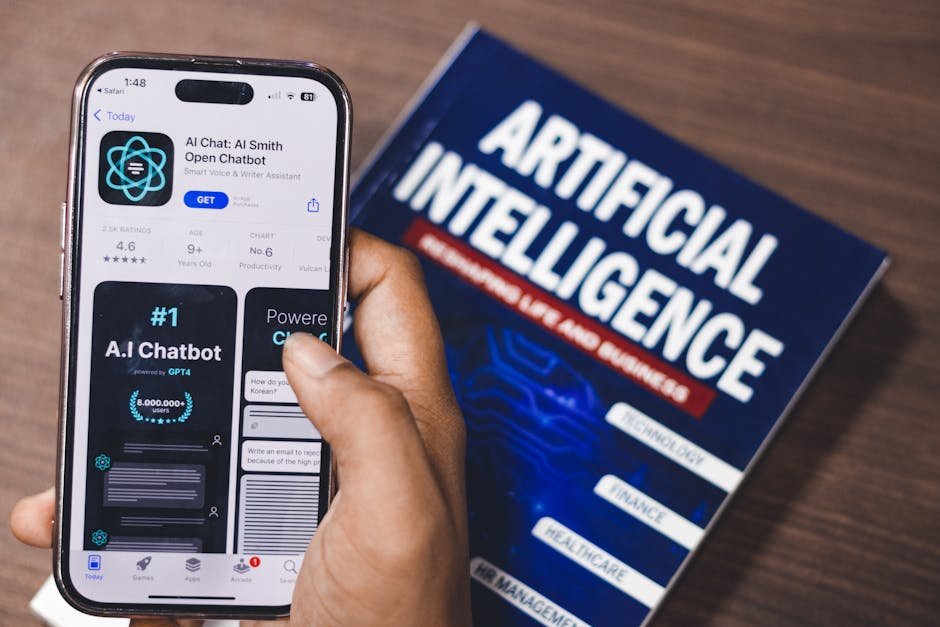
Emerging AI Tools: Making a Significant Impact on Productivity
The modern workplace is experiencing a paradigm shift, fueled by the rapid advancement of Artificial Intelligence (AI). Beyond the hype, AI-powered tools are demonstrating tangible results in boosting productivity across diverse industries. This article delves into specific emerging AI tools and explores how they are significantly impacting efficiency, accuracy, and overall output.
AI-Powered Writing and Content Creation:
One of the most prominent areas of AI’s impact is in writing and content creation. Tools like Jasper.ai, Copy.ai, and Rytr are revolutionizing how businesses generate marketing copy, blog posts, social media content, and even technical documentation. These AI writing assistants leverage natural language processing (NLP) and machine learning (ML) to understand user prompts and generate high-quality, original content.
- Enhanced Speed and Efficiency: Traditional content creation can be time-consuming, involving brainstorming, research, writing, and editing. AI writing tools automate much of this process, allowing users to generate multiple drafts in a fraction of the time. This frees up human writers to focus on higher-level tasks such as strategic content planning and editing for tone and accuracy.
- Improved Consistency and Branding: These tools can be trained on a company’s specific brand guidelines and voice, ensuring consistency across all content channels. This is particularly valuable for large organizations with multiple content creators, ensuring a unified brand message.
- Overcoming Writer’s Block: AI writing assistants can provide inspiration and generate initial drafts, helping writers overcome writer’s block and get started on projects more quickly. By providing a starting point, these tools can unlock creativity and streamline the writing process.
- SEO Optimization: Many AI writing tools integrate SEO capabilities, suggesting relevant keywords and optimizing content for search engines. This helps businesses improve their search engine rankings and attract more organic traffic.
AI-Driven Project Management and Collaboration:
Project management is another area where AI is making significant inroads. AI-powered project management tools are streamlining workflows, automating tasks, and improving collaboration among team members.
- Automated Task Management: Tools like Asana, Trello, and Monday.com are incorporating AI features to automate task assignment, prioritization, and scheduling. AI algorithms can analyze project data to identify potential bottlenecks and optimize resource allocation.
- Intelligent Scheduling and Resource Allocation: AI can analyze team member availability, skillsets, and project requirements to create optimal schedules and allocate resources effectively. This reduces the risk of project delays and ensures that the right people are working on the right tasks.
- Predictive Analytics and Risk Management: AI can analyze historical project data to predict potential risks and delays. This allows project managers to take proactive steps to mitigate these risks and keep projects on track.
- Enhanced Communication and Collaboration: AI-powered chatbots and virtual assistants can facilitate communication and collaboration among team members, answering questions, providing updates, and resolving conflicts.
- Automatic Progress Tracking: These tools can automatically track project progress and generate reports, providing stakeholders with real-time visibility into project status. This eliminates the need for manual tracking and reporting, saving time and improving accuracy.
AI-Powered Customer Service and Support:
AI is transforming customer service and support, enabling businesses to provide faster, more personalized, and more efficient service. Chatbots, virtual assistants, and AI-powered analytics are all playing a key role in this transformation.
- 24/7 Customer Support: AI-powered chatbots can provide 24/7 customer support, answering common questions and resolving simple issues. This reduces the burden on human agents and allows them to focus on more complex inquiries.
- Personalized Customer Experiences: AI can analyze customer data to personalize interactions and provide tailored recommendations. This improves customer satisfaction and loyalty.
- Faster Response Times: AI-powered systems can respond to customer inquiries much faster than human agents, reducing wait times and improving the overall customer experience.
- Improved Efficiency and Cost Savings: By automating many customer service tasks, AI can significantly improve efficiency and reduce costs.
- Predictive Customer Service: AI can analyze customer data to predict potential issues and proactively address them before they escalate. This prevents customer churn and improves customer loyalty.
- AI-Driven Sentiment Analysis: AI can analyze customer feedback to understand customer sentiment and identify areas for improvement. This helps businesses improve their products, services, and customer experience.
AI in Data Analysis and Insights:
AI is revolutionizing data analysis, empowering businesses to extract valuable insights from their data more quickly and efficiently. AI-powered tools can automate data cleaning, analysis, and visualization, enabling users to identify trends, patterns, and anomalies that would otherwise be missed.
- Automated Data Cleaning and Preparation: AI can automate the process of cleaning and preparing data for analysis, eliminating errors and inconsistencies. This saves time and improves the accuracy of the analysis.
- Advanced Analytics and Pattern Recognition: AI algorithms can analyze large datasets to identify complex patterns and trends that would be difficult or impossible to detect manually.
- Predictive Modeling: AI can be used to build predictive models that forecast future outcomes and inform decision-making. This is particularly valuable in areas such as sales forecasting, risk management, and fraud detection.
- Data Visualization and Reporting: AI can automate the creation of data visualizations and reports, making it easier to communicate insights to stakeholders.
- Real-Time Data Analysis: AI can analyze data in real-time, providing businesses with up-to-date insights that can be used to make timely decisions.
AI in Software Development:
AI is beginning to automate aspects of software development, increasing developer productivity and reducing development time. AI-powered tools can assist with code generation, testing, and debugging.
- AI-Assisted Code Generation: Tools like GitHub Copilot use AI to suggest code snippets and even entire functions based on natural language descriptions. This can significantly speed up the coding process.
- Automated Testing: AI can automate the process of testing software, identifying bugs and vulnerabilities more quickly and efficiently.
- Intelligent Debugging: AI can analyze code to identify the root cause of errors and suggest solutions.
- Code Completion and Refactoring: AI can assist with code completion, suggesting variable names, function arguments, and other code elements. It can also help with code refactoring, improving the quality and maintainability of code.
- AI-Driven Project Management for Software Development: AI can assist in managing software development projects by predicting timelines, allocating resources, and identifying potential roadblocks.
The Future of AI and Productivity:
The impact of AI on productivity is only going to grow in the coming years. As AI technology continues to evolve, we can expect to see even more sophisticated tools that automate complex tasks, improve decision-making, and enhance collaboration. However, it’s crucial to remember that AI is a tool, and its effectiveness depends on how it is used. Successful implementation requires careful planning, training, and a focus on augmenting human capabilities rather than simply replacing them. By embracing AI strategically, businesses can unlock significant productivity gains and achieve a competitive advantage. The ethical implications of AI, including bias mitigation and data privacy, must also be carefully considered and addressed as AI continues to integrate into the workplace.